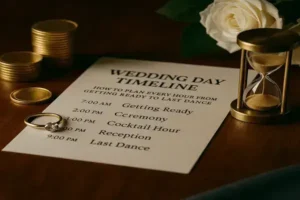

That moment when you fall for a venue, then learn the dance floor fits 60 but your list is 120 — brutal. The right wedding venue checklist questions save you from that. Imagine signing, then realizing there’s no rain plan or enough outlets for your DJ.
Here’s the thing: missed details cost real money and peace. Hidden fees snowball, noise ordinances cut your party short, and vendor restrictions box you in. You end up juggling last‑minute rentals, scrambling for power, and praying the weather behaves — not exactly the vibe you want.
By the end, you’ll have 25 sharp questions covering capacity, contracts, policies, vendors, weather backups, and true costs — no fluff. You’ll know exactly what to ask, when, and why, with wedding venue checklist questions you can copy straight into your notes. Ready to start with the essentials and avoid ugly surprises?
Essential Venue Logistics: Capacity, Layout, And Accessibility
Worried your 150‑person guest list will actually fit once the dance floor, bars, and band are set? Capacity isn’t a single number — it’s a puzzle.
Here’s the thing: the posted “max occupancy” assumes empty space. Real weddings add tables, buffet lines, staging, and safe walkways. You want comfort, not shoulder‑to‑shoulder chaos — and you need compliant exits and clear routes.
Quick Layout Math (Realistic Numbers)
| Layout Style | Sq Ft Per Guest (Typical) | Flow & Notes |
|---|---|---|
| Cocktail/Standing | 6–8 | High mingling; add 40–80 sq ft per bar and 50–80 sq ft per lounge cluster |
| Banquet (Rounds) | 10–12 | Comfortable aisles; budget 300+ sq ft for a mid‑size dance floor |
| Theater Seating | 6–8 | Efficient seating; ensure 36″ center and side aisles for safe egress |
What eats space fast? Stages, DJ booths, photo backdrops, and dessert displays. A 12’×16′ band stage (192 sq ft) plus a 18’×18′ dance floor (324 sq ft) can reduce seated capacity by two full tables or more.
💡 Pro Tip: Keep accessible routes at least 36 inches wide, plan a step‑free path from parking to seating, and confirm accessible restrooms. The U.S. Department of Justice’s ADA 2010 Standards and National Fire Protection Association guidance are the gold references for routes and egress.
Picture this scenario: you tour a “180‑cap” ballroom and love the skylights. On your layout mockup, you add a head table, two bars, a 10×10 photo booth, and a string‑light canopy. Suddenly, realistic capacity drops to 150 — and the caterer flags tight service aisles.
- Check primary entrance width, ramps/elevators, and door thresholds.
- Confirm at least one accessible seating zone with clear sightlines.
- Map emergency exits and keep aisles unobstructed.
- Audit restroom access and turning radius (60″ circle is a common target).
- Note load‑in paths for vendors — narrow corridors slow timelines.
For safety and legal compliance, confirm occupancy and accessibility with your local fire marshal or a certified accessibility specialist.
But there’s one detail most couples overlook until it’s too late — how policies and hidden fees change everything once you sign…
Contracts And Hidden Costs: What To Confirm Before You Sign
Think the price on the brochure is the price you’ll pay? It rarely is — contracts hide extras in plain sight, and small percentages add up fast.
Here’s the thing: venues often separate a nonrefundable retainer, a food-and-beverage minimum, and a service charge that isn’t a tip. Then come taxes, overtime, vendor access fees, and “required” rentals that blow past the initial quote.
⚠️ Important Warning: A “service charge” (often 18%–25%) usually isn’t gratuity and may be taxable. The Federal Trade Commission has pushed for junk-fee transparency, and the International Live Events Association notes that service fees cover operations, not staff tips. Always ask for a one-page fee glossary in writing.
In practice: a couple books a $12,000 F&B minimum. Add a 23% service charge ($2,760) and 8.5% sales tax on both. Toss in a $450 power drop, $300 ceremony flip fee, and $750 per half-hour after curfew. Their “$12k night” becomes $16k+ before bar upgrades.
What To Confirm, Line By Line
- Rental fee vs. F&B minimum — and whether service charges count toward that minimum.
- Service charge rate, what it funds, and if it’s taxable.
- Gratuity policy for banquet staff and bartenders; how tips are pooled.
- Taxes by line item: alcohol, rentals, service, and labor.
- Overtime rates, curfew fines, and mandatory security staffing.
- Corkage, cake-cutting, and outside-vendor access or commission fees.
- AV, generator, and power distribution charges; in-house technician minimums.
- Setup/strike labor, room flips, cleaning, and linen/chair upgrade fees.
- Parking, valet, and credit card processing surcharges.
- Damage deposit, refund timeline, and what triggers withholdings.
Before You Sign: A Quick Process
- Request an itemized estimate labeled “out-the-door” with taxes, fees, and surcharges.
- Ask for a sample past invoice for a similar guest count and format.
- Confirm the cancellation schedule, reschedule terms, and any force majeure language.
- Cap risk: add a not-to-exceed line for discretionary labor and rentals.
- Clarify payment schedule, grace periods, and late fees in dollars, not percentages.
- Require all verbal promises in a signed addendum with initials and dates.
- Get a floor plan with included inventory noted (tables, chairs, staging) to prevent “surprise rentals.”
The truth is, policies drive penalties — noise limits, curfews, permits, and insurance can shift your budget overnight… and this is exactly where most people make the most common mistake.
Policies That Trip Couples Up: Noise, Curfews, Permits, And Insurance
Will your DJ push 95 dB at 10 p.m. when the city caps 70 at the property line? Noise, curfews, permits, and insurance decide that — not vibes.
Here’s the thing: municipal ordinances, venue house rules, and insurer requirements can change your timeline and total cost. One missed permit or a late “last call” can trigger fines, forced shutdowns, or denied claims.
⚠️ Important Warning: Decibel limits are often measured in A-weighted dB at the property line, not the dance floor. The World Health Organization’s environmental noise guidance and many city codes set lower limits at night — confirm the exact cap, location, and time window in writing.
| Policy Area | Typical Limit/Rule | Ask The Venue |
|---|---|---|
| Noise Ordinance | 65–75 dB(A) after 10 p.m. | Where measured? Who monitors? Penalty steps? |
| Curfew | Music off 10–11 p.m.; exit by 11–12 | Last pour time, lights up, load‑out grace |
| Permits | Amplified sound/special event permit | Who files, deadline, backup plan |
| Insurance | $1M per occurrence GL; liquor liability | COI due date, Additional Insured wording |
Picture this scenario: at 9:52 p.m., a manager shows two noise warnings. The band’s last set gets cut, your timeline compresses, and vendors bill overtime for a rushed strike — painful, preventable, and fully policy-driven.
How To Stay Compliant (And Calm)
- Request the venue’s policy sheet listing decibel caps, curfews, fines, and required permits — one page, signed.
- Confirm the measurement point for noise and do a two‑minute sound check with a meter at your final walk‑through.
- Lock a curfew schedule: last pour, music off, lights up, guest exit, vendor load‑out — with penalties and grace times.
- Clarify permits: who files, fees, lead times (often 10–30 days), and the fallback if denied.
- Collect Certificates of Insurance from all vendors: general liability limits, host liquor liability if serving alcohol, Additional Insured and waiver language. The Insurance Information Institute has plain‑English definitions you can reference.
What actually works might surprise you — vendor, catering, and alcohol policies can open (or close) more doors than any clause on paper…
Vendors, Catering, And Alcohol: Restrictions, Preferred Lists, And Workarounds
Is your dream caterer even allowed — or will the venue force their “exclusive” partner and a fixed bar package? These rules shape cost, flavor, and flow.
Here’s the thing: vendor policies aren’t personal. They protect the property, licensing, and service standards. But they also add real fees — corkage per bottle, outside-vendor surcharges, and kitchen access charges can swing your final bill by thousands.
| Policy | What It Means | Workaround |
|---|---|---|
| Exclusive Caterer | You must use the in‑house/contracted team | Request a culinary “buyout” or limited off‑list exception |
| Preferred List Required | Pick from approved vendors only | Provide extra insurance + pay opt‑out fee |
| BYO Alcohol Ban | Only venue bar/service allowed | Negotiate a consumption bar or beer‑and‑wine tier |
| Corkage Fee | $15–$35 per 750 ml bottle is common | Price a venue bar package vs BYO math |
| Kitchen Access Limits | Warming only; no on‑site cooking | Choose menus that travel; add hot boxes |
💡 Pro Tip: Ask for proof of license and safety training for anyone serving food or alcohol. ServSafe Manager certification (National Restaurant Association) and a state Alcoholic Beverage Control server program (like TIPS or LEAD) reduce risk and keep insurers happy.
In practice: you want your favorite taco truck. The venue requires preferred vendors and bans fryers indoors. Solution — pay the off‑list fee, stage the truck outdoors, switch to griddle‑only proteins, and add a satellite bar with beer, wine, and a batched margarita. Net effect: same vibe, fully compliant.
Smart Workarounds That Keep You Compliant
- Ask if there’s an opt‑out or buyout fee to use a non‑listed caterer — sometimes 10%–20% of the food invoice.
- Price three bar models: hosted package, consumption bar, and BYO with corkage. Run the math at your actual guest count and pour rate.
- Confirm staffing ratios (like 1 server per 20–25 guests, 1 bartender per 60–75) to avoid slow lines and surprise labor add‑ons.
- Use a commissary kitchen for off‑site prep, then hold temps with insulated hot boxes to meet health department standards.
- If spirits are limited, lean into a premium beer/wine list and one signature cocktail — it cuts costs without feeling “less-than.”
And this is exactly where most people make the most common mistake — they forget how indoor vs. outdoor setups and weather backups change food safety, bar flow, and power needs…
Indoor Vs. Outdoor Venues: Side-By-Side Comparison Table And Weather Backup Plans
Love those open‑air vows — but what’s your 60‑minute rain trigger, and where will 150 chairs actually go if thunder rolls in? Indoors vs. outdoors is a planning fork.
Here’s the thing: indoor venues buy you control — HVAC, acoustics, lighting, power — while outdoor spaces buy you scenery and flexible footprints. The tradeoffs are real: tent rentals, flooring, climate control, generators, and portable restrooms can rival a ballroom fee fast.
| Criteria | Indoor Venue | Outdoor Venue |
|---|---|---|
| Weather Risk | Low; HVAC and shelter | High; tenting and wind thresholds |
| Sound & Curfews | Controlled acoustics; later curfews common | Ordinance‑limited; earlier quiet hours likely |
| Setup Costs | Often included basics | Tent, flooring, heaters/fans add up |
| Power | On‑site circuits, built‑in AV | Generators, GFCI distro required |
| Accessibility | Elevators, ramps, restrooms | Uneven ground; path mats or ramps |
| Photo/Lighting | Consistent; may need uplights | Golden hour magic; risky after dusk |
| Plan B Complexity | Simple flip or room change | High; tent specs, wind, lightning rules |
⚠️ Important Warning: A tent is a temporary building. Confirm wind ratings, ballast requirements, and egress per local fire code and NFPA guidance; use the National Weather Service 30/30 lightning rule for safety triggers.
In practice: at 3:10 p.m., radar shows lightning within 8 miles. Your coordinator calls the backup — ceremony shifts to the ballroom, the DJ cues prelude indoors, and catering covers the sod with runner mats. Guests are seated by 3:40 — dry, comfortable, on time.
Build A Weather Backup That Works
- Set triggers in writing: rain probability at 60–90 minutes out, lightning within 10 miles (NWS rule), or steady winds over your tent’s rating.
- Pre‑layout Plan B: ceremony and cocktail maps sized for your real guest count, plus a minimum 18’×18′ dance floor if reception moves inside.
- Specify tent details (if outdoors): frame size (e.g., 40×80), sidewalls, clear vs. solid panels, ballast weights, and two clear egress paths.
- Lock power and climate: generator kW for band + lighting + heaters/fans; request GFCI protection and a supervised test‑run at walk‑through.
- Hold critical rentals on “will‑call”: flooring, heaters, fans, sidewalls, and path mats with a 72‑hour release so you’re not paying if skies stay clear.
- Assign roles: who flips chairs, who moves the arch, who updates signage, and who texts guests; add 15 minutes of buffer to the formalities.
The right habits in place now — clear triggers, mapped layouts, and reserved gear — make everything easier from here.
Your Venue Plan Is Solid
You now know how to size the room, map safe flow, and ensure access. You know where fees hide and what each contract line means. And you understand policies, vendor limits, and when to trigger Plan B for weather. If you take just one thing from this guide, let it be: use clear, written wedding venue checklist questions to uncover costs, rules, and backups before you sign.
Before, venue tours felt dreamy but vague — capacity guesses, mystery fees, and “we’ll figure it out.” Now you can compare apples to apples. Short asks. Firm numbers. Real timelines. You’ll walk in with a plan, leave with an itemized estimate, and sleep knowing your rain, noise, and power contingencies are covered.
Which section will you tackle first — logistics walk‑through, contract audit, or your weather backup map? Share in the comments so we can cheer you on.

About the Author: Isabella Mae Thornton is a wedding planning enthusiast, lifestyle writer, and the founder of this blog — built for couples who want to plan their dream wedding without losing their minds in the process.
After helping friends and family navigate the overwhelming world of venues, vendors, timelines, and budgets, Isabella realized that most wedding planning advice online was either too vague to be useful or too expensive to be practical. So she started creating her own resources — detailed checklists, honest guides, and printable templates designed for real couples with real budgets.
Isabella is not a certified wedding planner or event coordinator — just someone who has been deep in the world of wedding planning, seen what works and what doesn’t, and genuinely loves helping couples feel organized and confident on the most important day of their lives.
Every article on this site is researched with care, written in plain language, and designed to save you time, money, and stress — from the moment you get engaged to the morning after the big day.
When she’s not writing or deep-diving into wedding trends, Isabella is testing new planning tools, reviewing vendor contracts, and trying to convince everyone that the rehearsal dinner deserves way more attention than it gets.